Skwiix - Musical-Info-Advice-Support
  • Home
  • Brass & Woodwind
    • Clarinet
    • Flute
    • Recorder
    • Saxophone
    • Trumpet
  • Drums
  • Piano
    • Strings >
      • Cello
      • Guitar
      • Violin >
        • Buying tips & guidelines
  • Instruments
  • Learn
  • Skwiix outlet (Coming soon)
  • Contact Us
Back to Drums home

History of the Drums

7th Century
Picture
Drums and the act of drumming have been around for thousands of years, but the Drum Kit occupies a relatively new place in the history of drumming.

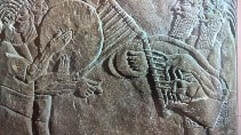
​Percussion instruments that make up the drum kit have an ancient multicultural history. The first traces of cymbals and drums date back to the 7th century BC. Sculptures and paintings of cymbals and drums were found in ancient tombs created by the Romans and the Egyptians. Cymbals were excavated from tombs of the ancient Greeks, who believed they had the power to keep away evil spirits.

Drums were used to create music and for various aspects of social life, including rituals, ceremonies, messaging, and religious and civil purposes. Later, the army used drums and cymbals, like horns, trumpets and bagpipes, for military training and performances and even war.

Picture

19th Century

Picture
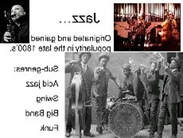
Drum sets first appeared in the late 1800s due to the rising number of ensembles, including marching and military bands. As these ensembles typically played in parades, there was plenty of space for a large percussion section to roam about, and separate percussionists were assigned to drums and cymbals. Indoor concerts, on the other hand, had obvious physical constraints and therefore, percussionists often had to do double duty, and bands began arranging a number of different drums onstage for a single person to play simultaneously

The bass drum, snare drum, cymbals and other percussion instruments were then played by hand. Circa 1890, experimentation with foot pedals began. Liberating the hands for the first time, this evolution saw the bass drum played (first standing) with the foot of a percussionist.


20th Century

Picture
The bass drum, snare drum, cymbals and other percussion instruments were then played by hand. Circa 1890, experimentation with foot pedals began. Liberating the hands for the first time, this evolution saw the bass drum played (first standing) with the foot of a percussionist.

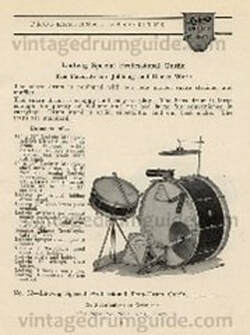
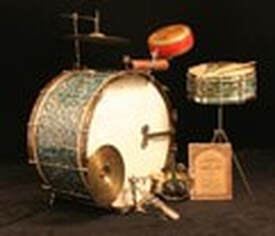
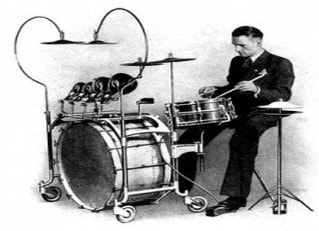
During the 1920s, further drumming innovations were introduced that used the feet and hands, allowing drummers to add more instruments to their repertoires. The "low boy" was invented, allowing drummers to play the cymbals hands-free. At the same time, drummers from New Orleans began adding other percussion instruments to their drum sets, such as the African tom-tom and the hi-hat cymbal. A "contraption" (shortened to "trap") tray was used to hold whistles, klaxons, and cowbells; thus, drum kits were dubbed "trap kits". Hi-hat stands appeared around 1926.

Picture
Picture
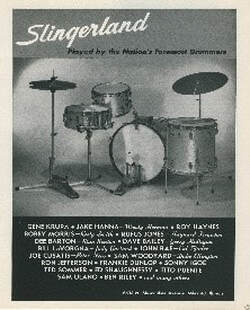
​In the 1930s, one of the first great drum-set players, Gene Krupa of the Benny Goodman Orchestra, ditched the contraption kit and opted for a four-piece kit with bass and snare drums, a small tom mounted to the bass drum, and a larger one on the floor, complemented by a hi-hat and ride, splash and crash cymbals: the drum kit in its modern incarnation. The modern drum kit allowed players like Max Roach to introduce new ways of drum tuning and play polyrhythms at racing tempos. In the 1940s, develop a highly complex new jazz idiom - bebop. These two innovations brought greater flexibility to drum sets.

Picture
​In the 1950s, synthetic drum skins began to replace animal skins, which helped with tuning the drums to the drummer's needs. Before 1957, all drums used in standard drum kits were made from deerskin. The problem with these drums was that they often needed to be tuned (which was not possible) and became easily damaged by environmental factors, such as the weather. If it was hot and humid, the tones of the drums came out as much lower, but if it was cold and dry, the drummers needed to moisten their drum skins to achieve the correct sound.

Picture
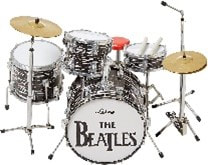
​The 1950s and 60’s also marked the beginning of rock’n’roll, which also made percussion instruments and, in particular, the drums very popular among younger generations who would listen to bands such as the Beatles, Led Zeppelin and The Who. Thanks to ever more powerful sound-reinforcement equipment, rock became louder and louder in the next decade. Drummers adapted by modifying their kits to compete with electric guitars and basses. Manufacturers responded to the need for loudness by producing kits with more significant numbers of components and by thickening their cymbals. In the ‘70s, the acrylic drum was developed to deliver the decibels necessary for the demands of louder arena environments.

Picture
Picture
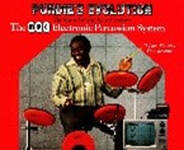
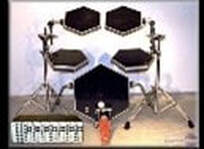
​Another significant development came in the ‘80s, with the introduction of MIDI technology and drums equipped with soft pads triggering electronic sounds when struck. The earliest electronic kits had physical advantages over traditional drums. They were compact and could be used with headphones for practising quietly.

Picture

21th Century

Picture
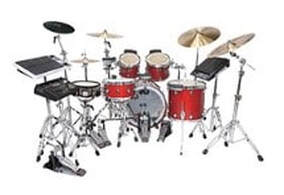
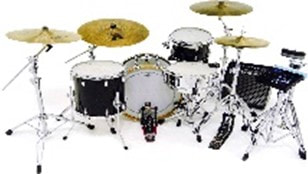
In the 21st century, it is not uncommon for drummers to use a variety of auxiliary percussion instruments, objects and electronics as part of their "drum" kits. New technologies such as resonance-enhancing suspension designs and electronic sound modules; laptop computers used to activate loops, sequences and samples; metronomes and tempo meters; recording devices; and personal sound reinforcement equipment have been added to drum kits.

These days, you can completely customise almost any new drum kit to the drummer's needs and the style of music they intend to play. What new creations will be incorporated into future drum kits is anyone's guess. They will only be limited by the imaginations and creativity of musicians and manufacturers

Picture

Famous drum players throughout time

​Art Blakey, Max Roach, John Bonham, Buddy Rich, Keith Moon, Ginger Baker, Phil Collins, Gene Krupa, Neil Peart, Ringo Starr, Stewart Copeland, Chad Smith, Steve Gadd, Billy Cobham, Frank Zappa, Bernard Purdie, Charlie WattsElvin Jones, Sheila E, Peter Gabriel, Tony Williams, Max Weinberg, Roy Haynes, Dennis Chambers, Harvey Mason, Clyde Stubblefield and Lars Ulrich.

Skwiix

Instruments
Learn
Skwiix Outlet
Contact Us
© 2021 Skwiix // Musical information, advice & support
  • Home
  • Brass & Woodwind
    • Clarinet
    • Flute
    • Recorder
    • Saxophone
    • Trumpet
  • Drums
  • Piano
    • Strings >
      • Cello
      • Guitar
      • Violin >
        • Buying tips & guidelines
  • Instruments
  • Learn
  • Skwiix outlet (Coming soon)
  • Contact Us