Skwiix - Musical-Info-Advice-Support
  • Home
  • Brass & Woodwind
    • Clarinet
    • Flute
    • Recorder
    • Saxophone
    • Trumpet
  • Drums
  • Piano
    • Strings >
      • Cello
      • Guitar
      • Violin >
        • Buying tips & guidelines
  • Instruments
  • Learn
  • Skwiix outlet (Coming soon)
  • Contact Us
Back to Flute home

History of the Flute

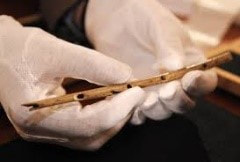
900 B.C.
Picture
Percussion instruments that make up the drum kit have an ancient multicultural history. The first traces of cymbals and drums date back to the 7th century BC. Romans and Egyptians created sculptures and paintings of cymbals, and drums were found in ancient tombs. Cymbals were excavated from tombs of the ancient Greeks, who believed they had the power to keep away evil spirits. Drums were used not only to create music but for various aspects of social life, including rituals, ceremonies, messaging, religious and civil purposes. Later, the army used drums and cymbals like horns, trumpets, and bagpipes for military training, performances, and even war.

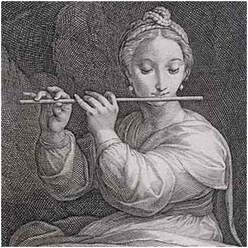
​Flutes were popular with the Romans and Etruscans though there is no evidence of flutes played in ancient Greece. Flutes were used to entertain royalty in theatrical productions, festivals, and celebrations. Flutes became less popular after the fall of Rome but were eventually re-introduced to western Europe through Germany.​

11th - 16th Century

Picture
Picture
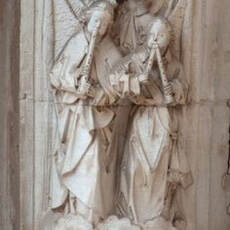
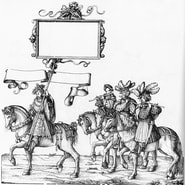
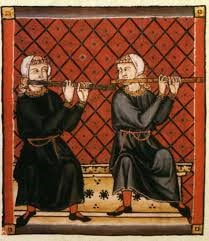
Early flutes were played in two different positions: vertically, like a recorder, or horizontally, in the transverse position. The transverse flute first arrived in Europe with traders from the Byzantine Empire during the Middle Ages. It was so popular in Germany that it became known as the German flute.

Picture
Picture
Picture
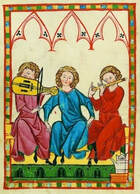
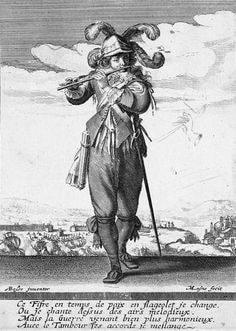
During the 1100s and 1200s, the flute was widely used in courtly music and saw use as a military signalling and marching tool. In the 1300s, it appeared in non-germanic countries such as France, Spain, and Flanders, and the Swiss mercenaries helped popularise it.

Picture
Around 1320, the one-piece, two-inch, wooden flute in the key of "D" was invented. In 1364, Guillaume de Machaut made the distinctive flute that uses a block to direct air at the edge of the hole (like the recorder) and flutes that need the players to direct air with their lips (The transverse flute).  

17th Century

Picture
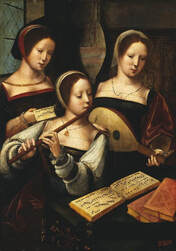
During the Renaissance, it became fashionable for amateur flute players to practice and play together with what was known as "consort music" in cultured homes. The flute was an essential part of these groupings. By 1600, plucked and bowed instruments were combined with flute in mixed consort music.​
​During this period, Italian and Dutch flute makers experimented with the size of the flute's bore, added the E flat tone hole and divided the flute into sections that made storage and travel easier. In 1619
, Praetorius' "Styntagma Musicum" featured three Querflötten flutes with ranges of two octaves.


Picture
Picture
​The Transverse flute, also known as the Flutes Allemands (German Flutes), originated in 1636 in Germany. These flutes have keys of "D" and "G", a new cylindrical bore, and are made of wood. 
​Additional adjustments were made to the flute by Jean Hotteterre in 1670. These included: -
  • Splitting the flute into three parts, the head joint, middle joint and foot joint
  • The conical bore, the foot joint of the flute, was the smallest in diameter
  • The six finger holes remained, but they were smaller
  • The first key that produces an E-flat note

18th Century

Picture
Picture
Picture
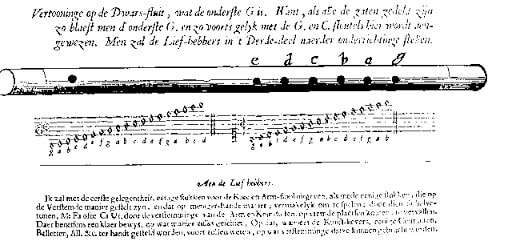
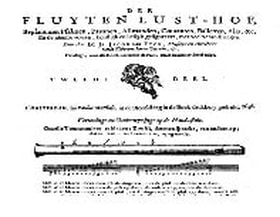
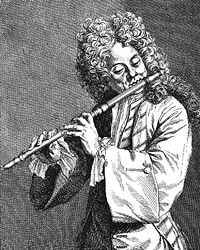
The late 1600s and 1700s saw a solo flute repertoire emerge, giving players music that featured a range extended below the usual high-register melodies. It also called for the player to add more character to each part, and the first flute method books for beginners were published and sold around 1710. Composers like Vivaldi, Bach, Handel, Telemann and Blavet wrote extensively for the solo flute. Professional players began to find success travelling from area to area, performing concerts on the baroque flute.
In 1720, the Corps de Recharge was introduced, dividing the middle joint of the flute into two pieces - into extra joints of different lengths. This introduction allowed the flute player to shift the instrument's pitch to tune with the orchestra. The short and long bits could be adjusted to play higher or lower


Picture
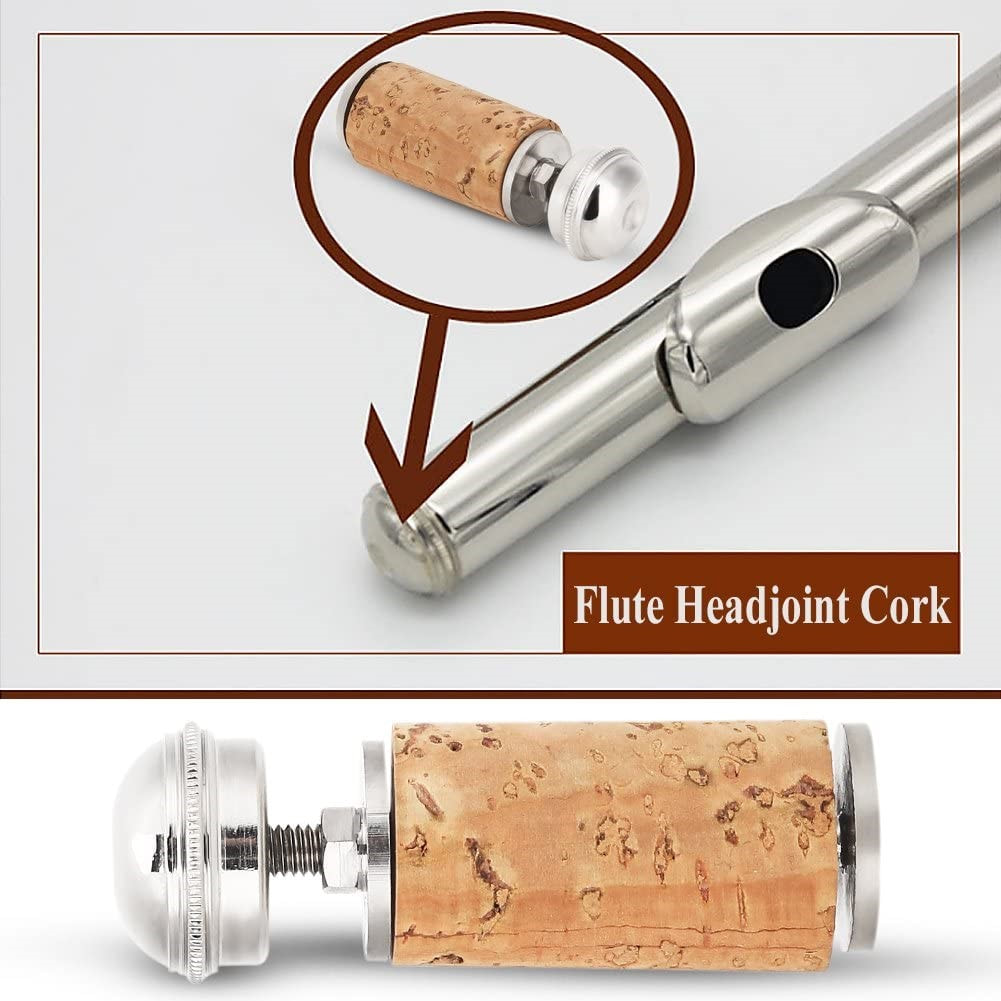
1722 saw the introduction of the flautist quartz that added a tuning cork to the head joint and a C# key to the foot joint. The flautist quartz was followed by the E flat key to the foot joint in 1726.
 
Between 1750 and 1760, London instrument makers took the baroque flute. They added a system of flute keys (G#, B-flat & F keys) while also increasing the taper of its bore. The result was an even stronger lower register and more solid tuning. They then, in 1774, went on to remove the C# key from the foot joint.
 
In the Early 1780s, Mozart and Haydon composed flute featuring music with four and Six key flutes featuring strongly in many of their symphonies – The Meyer-system flute, which has eight keys, was also made around this same time and the flute maker J.H Ribock in 1782 introduced the closed C key to the flute. By the end of the century, the keyed flute was almost universally adopted. Every country had its style of keyed flute and hosted visiting artists from other countries to show off their repertoire, instrument and skill.

19th Century

Picture
Flute design flourished through the first half of the 19th century, with significant design variations found in Austria, England, America, France and Germany, among others.
​
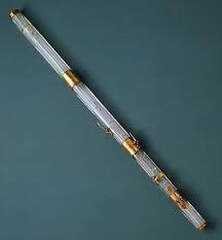
The B-flat and left-hand lever were added in 1800, and between 1806 - 1844 Claude Laurent made several glass flutes with a range of three, four, or seven keys. The open holes (finger pad cover holes) that connected the keys then got invented in 1808 by Frederick Nolan 

Picture
Picture
In 1810 George Miller made metal bores, and Theobald Boehm experimented with different keys, springs and pads to create his flute model, leading to the instrument's popularity across Europe, especially in England in 1820.

In 1822 the Nicholson's (father and son) adjusted the placement of keys, made the holes larger, and made a thinner flute.
Marker Pottgiessen invented the ring and crescent keys, which he added to the flute in 1824, and in 1827, Rudall and Rose created an eight-keyed flute.
Between 1829 and 1834, Boehm's key design used a system of complex interlocked rods, boring holes, pillars, posts, and flat gold springs to allow accurate, fast fingering in a more natural hand position. His model became very popular and attracted attention, especially amongst German and French flautists and was presented in performances in London and Paris.
In 1832 Boehm became impressed by Nicholson's flute design, which produced a clearer tone, and switched his flute to ring keys instead of open holes, thus improving the tone of his flutes. He also invented the left-hand thumb crutch, which helped with finger action when playing the flute.

Picture
Buffet and Coche added the D# and G# keys in 1838. 1846 to 1847 saw Boehm give his flutes a new cylindrical bore. He also enlarges the embouchure to a quadrangular hole to produce a fuller and clearer tone. His new fingering system covers the inside of his closed keys with felt pads and the rims with skins holding the keys together with screws and washers. He experiments with different materials for making flutes. He decided that silver was the best because it is light and produces the best tone.
​
Rudall and Rose, Clair Godfroy and Louis Lot bought t rights to manufacture Boehm flutes from Boehm in 1847. The flute went to New York, where it became prevalent, and flutes got adopted as official orchestral instruments in the Paris conservatory. In 1849 Composer Briccialdi added the thumb B-flat key to the instrument.

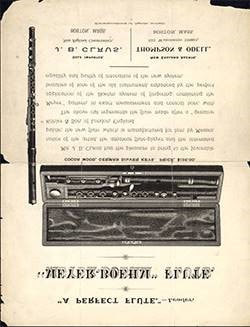
Over time the Vienna style of flute, with its conical bore and range down to G on the violin, became very popular. Its design was merged again with the traditional keyed flute around 1850 to become an instrument known as the "Meyer" flute, which was quickly adopted across America and Europe. However, 20 years later, in 1878, the superior technology of Boehm's style flute, the 'modern silver flute', put it well on the way to becoming the preeminent perfected model instrument used by both professional and amateur musicians and accepted as the standard today.
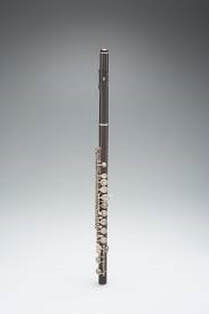
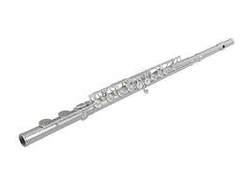
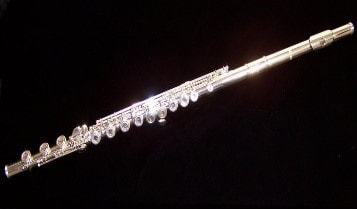
Today's flute is based on Boehm's innovations, with modifications that vary somewhat depending on the instrument maker. One significant note change since that time was the re-scaling of the flute in the 1960s by flute maker Albert Cooper and a group of English players. They re-scaled the French-style metal Boehm flutes to fit a standard pitch that had come into worldwide use by about 1950. At the same time, Cooper introduced new styles of cutting the flute's embouchure hole, further altering its sound ideals. Manufacturers adopted Cooper's innovations in America and Japan, now the only countries with viable flute-making industries.

Picture

Skwiix

Instruments
Learn
Skwiix Outlet
Contact Us
© 2021 Skwiix // Musical information, advice & support
  • Home
  • Brass & Woodwind
    • Clarinet
    • Flute
    • Recorder
    • Saxophone
    • Trumpet
  • Drums
  • Piano
    • Strings >
      • Cello
      • Guitar
      • Violin >
        • Buying tips & guidelines
  • Instruments
  • Learn
  • Skwiix outlet (Coming soon)
  • Contact Us