Skwiix - Musical-Info-Advice-Support
  • Home
  • Brass & Woodwind
    • Clarinet
    • Flute
    • Recorder
    • Saxophone
    • Trumpet
  • Drums
  • Piano
    • Strings >
      • Cello
      • Guitar
      • Violin >
        • Buying tips & guidelines
  • Instruments
  • Learn
  • Skwiix outlet (Coming soon)
  • Contact Us
Back to Violin home

History of the Violin

Records of bowed stringed instruments go back to the Middle Ages, where it is thought that they originated in Central Asia before spreading (via trade routes) to other parts of the world. The earliest Violins incorporated features of other existing bowed instruments: the rebec, the Renaissance fiddle and the lira da braccio. 

9th Century
Picture
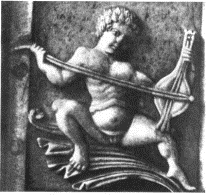
There is evidence of two bowed string instruments being used by European musicians at this time. The lira originated from the Byzantine Empire (Greece), and the rebab, an equivalent instrument, originated from the Islamic empires of the Middle East.
11th - 12th Century 

13th Century 

Picture
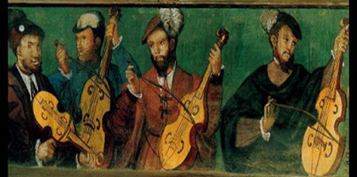
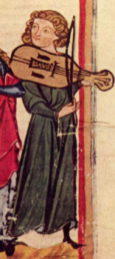
The lira and rebab spread throughout Europe, and other equivalent families of bowed string instruments were created, including the fiddle

Picture
The viola da gamba, meaning ‘viol for the leg’ group, was among the most influential families of bowed stringed instruments. These elegant instruments were closely related to the Violin family and, in their heyday, were of greater importance than the Violin. However, they eventually lost ground to the louder original. They were viewed as a less aristocratic instrument in the violin family.

16th Century

Picture
The Violin in its present form emerged in Northern Italy around the early 16th century. Andrea Amati made the first four-string Violin in 1555 in Cremona, Italy. Andrea Amati's grandson, Nicolo, is perceived as the best violin maker.

Picture
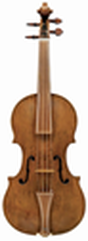
The oldest surviving Violin is one from a set commissioned by Charles IX from Andrea Amati and made in Cremona c. 1560. It is known as the "Charles IX." Several generations of the Amati family and their followers continued making Violins and providing apprenticeships for several subsequent gifted Violin makers (or luthiers), including Antonio Stradivari, acknowledged to be the greatest Violin maker in history, and Bartolomeo Giuseppe Guarneri building the Violin to its highest level of perfection both ​as a musical instrument and as a work of art. ​

17th Century

Picture
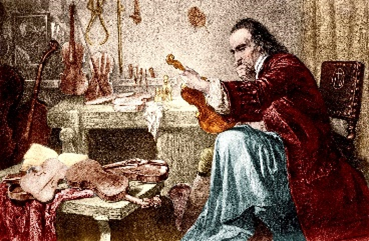
Italian luthiers continued to refine and perfect Violin making. During the 17th century, Violin making spread to all of the other countries of Europe. The Italians Antonio Stradivari (apprentice to Nicolo Amati), Giuseppe Guarneri, and the Austrian Jacob Stainer are most noted during this period. 

18th - 19th Century

Picture
During the late 18th and early 19th centuries, the Violin underwent significant technical changes. The fingerboard of the Violin was made longer and set at more of an angle to support the tension of the strings being increased. The increased tension of the strings, coupled with the change in the fingerboard, resulted in the Violin having an increased range and sound projection

Picture
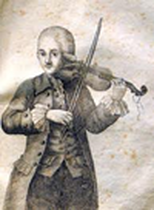
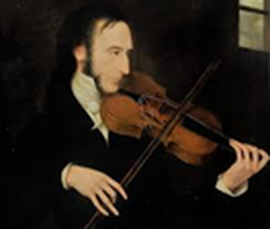
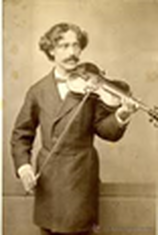
In the mid-18th century, the Violin was vital in instrumental music ensembles. In the 19th century, the Violins' rise to fame continued in the hands of virtuoso Violinists such as Nicolò Paganini and Pablo de Sarasate. 

Picture
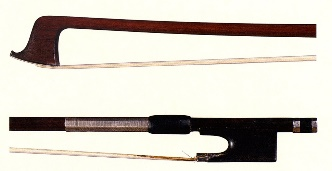
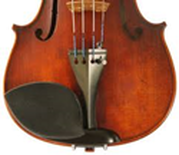
In the 19th century, the modern Violin was established. The contemporary bow was invented by Francois Tourte (1747-1835). Its weight, length, and balance allowed the player to produce power and brilliance in the higher ranges. Louis Spohr’s invention of the chin rest around 1820 allowed the player to hold the Violin comfortably and play in higher positions. It also significantly advanced playing technique and allowed the Violin repertoire to reach its virtuoso level.
​

20th Century

Picture
The violin reached new heights in the 20th century, both in technical and artistic aspects. Isaac Stern and Fritz Kreisler are two of the best-known icons of this time. ​

Skwiix

Instruments
Learn
Skwiix Outlet
Contact Us
© 2021 Skwiix // Musical information, advice & support
  • Home
  • Brass & Woodwind
    • Clarinet
    • Flute
    • Recorder
    • Saxophone
    • Trumpet
  • Drums
  • Piano
    • Strings >
      • Cello
      • Guitar
      • Violin >
        • Buying tips & guidelines
  • Instruments
  • Learn
  • Skwiix outlet (Coming soon)
  • Contact Us